Two Years Running, Maryland #12 Among Publics for Undergrad Engineering
September 22, 2026
How to Major in the Future
At Maryland Engineering, academics are just the beginning of a whole-student education that gives today’s engineers the tools to make tomorrow’s world better.
For the second consecutive year, the A. James Clark School of Engineering ranks #12 among the country’s public colleges and universities in undergraduate engineering, according to U.S. News & World Report’s (USNWR) 2026–27 rankings of more than 200 degree programs. Overall, Maryland Engineering ranked #22, marking the 24th consecutive year the school is among the nation’s top 25 undergraduate programs.
“Engineers remain a critical part of today’s society: the opportunities and challenges before us require their unique skillset to solve. Our undergraduates aren’t just learning about society’s needs; they are designing the solutions,” said Dean Samuel Graham. “We’re incredibly proud to offer a vibrant mix of experiences for undergraduates to hone their skills and pursue their passions, build confidence in their knowledge and discover more through our educational and experiential learning programs, and enter the workforce ready to deploy engineering for humanity’s good.”
The Clark School is known for its full-circle student-centered commitment, including support for student organizations, competition teams, and advisory councils. The school continually improves the student educational experience, a commitment seen in the quality of the education its students receive. Senior Vice President and Provost Jennifer King Rice described how the Clark School’s Vertically Integrated Projects initiative, geared for undergraduates, “has become a model for campus.”
Five programs in the top 15; Aerospace, Computer, Electrical Rise
In addition to being #12 among public and #22 among all institutions, five of the Clark School’s departments rank among the top 15 public programs in the country; all rank in the top 25 (USNWR did not rank fire protection or materials science programs; the Clark School offers both).
| Department | Overall | Public |
|---|---|---|
| Aerospace Engineering | 13 | 9 |
| Bioengineering (Biomedical Engineering) | 30 | 15 |
| Civil & Environmental Engineering | 33 | 24 |
| Computer Engineering | 16 | 10 |
| Electrical Engineering | 17 | 11 |
| Mechanical Engineering | 20 | 13 |
A curriculum that responds to societal needs
One of Maryland Engineering’s hallmarks is responding quickly to changes in the nation’s economy and its workforce for the benefit of its students, decisions informed by an active advisory board of leading academic and industry professionals.
The undergraduate mix includes classroom, lab, and hands-on experiences; internship, career placement, and entrepreneurship through xFoundry and Startup Shell; club and competition teams; and access to cutting-edge facilities. Examples include:
Academic programs
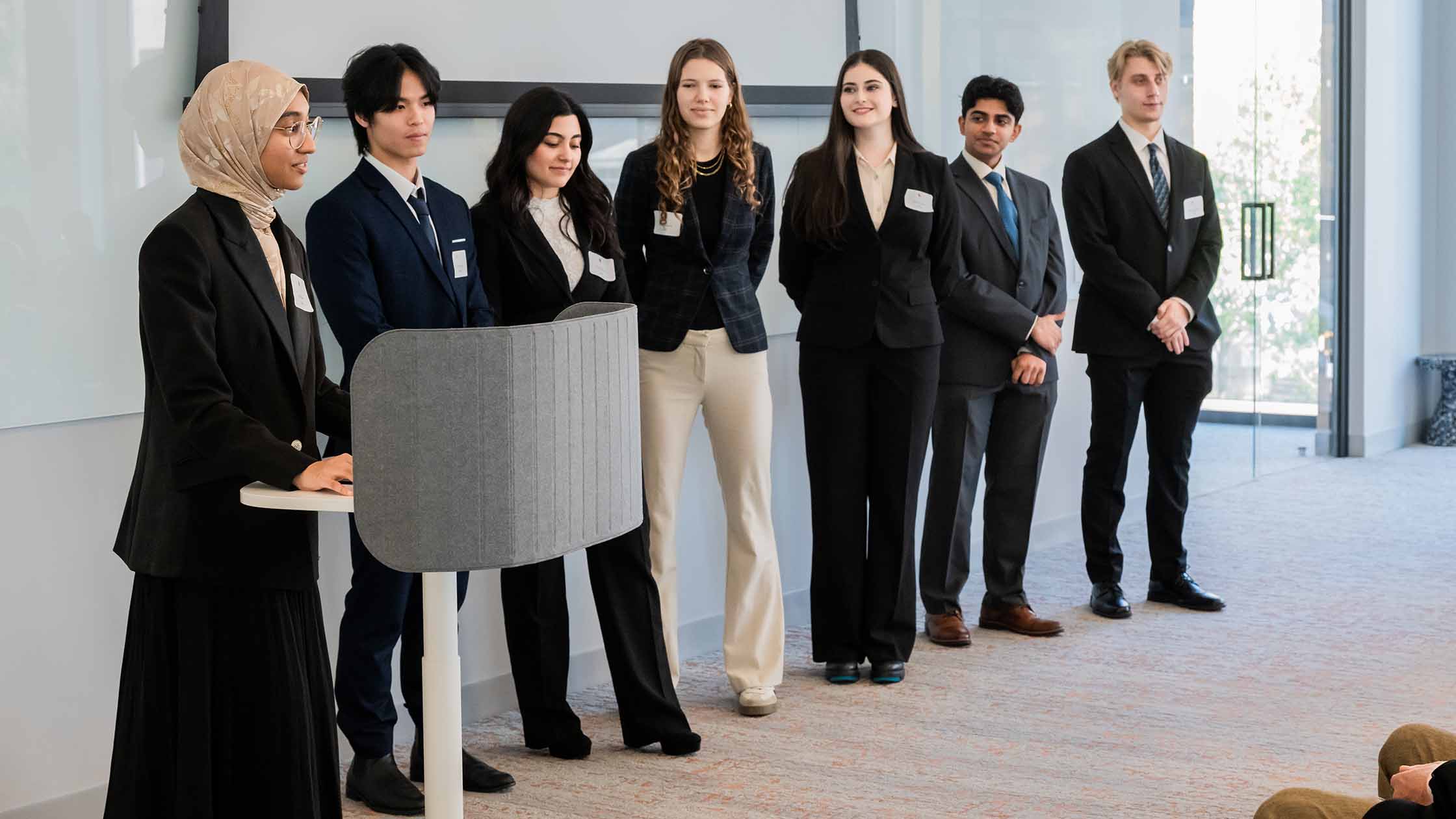
In Fall 2025, we admitted the first cohort of students to our B.S.-M.D. program, one of the first such programs to specifically target engineering, math, and computer science majors, allowing them to earn a B.S. degree from University of Maryland, College Park and an M.D. from the University of Maryland School of Medicine in Baltimore.
- Research immersion programs specifically geared towards undergraduates
- Engineering Artificial Intelligence (AI), where students can master the skills needed to apply AI to specific engineering fields
- A minor in quantum science and engineering
- A B.S.-M.D. program, designed to prepare students and provide admissions to medical school at the University of Maryland Baltimore after their freshman year
- The Keystone Program, providing comprehensive support for students in first- and second-year engineering courses, pairing top faculty with students in a smaller setting
- Study abroad, enabling nearly 30% of undergraduate engineering students to have an international experience before graduation
Industry partnerships
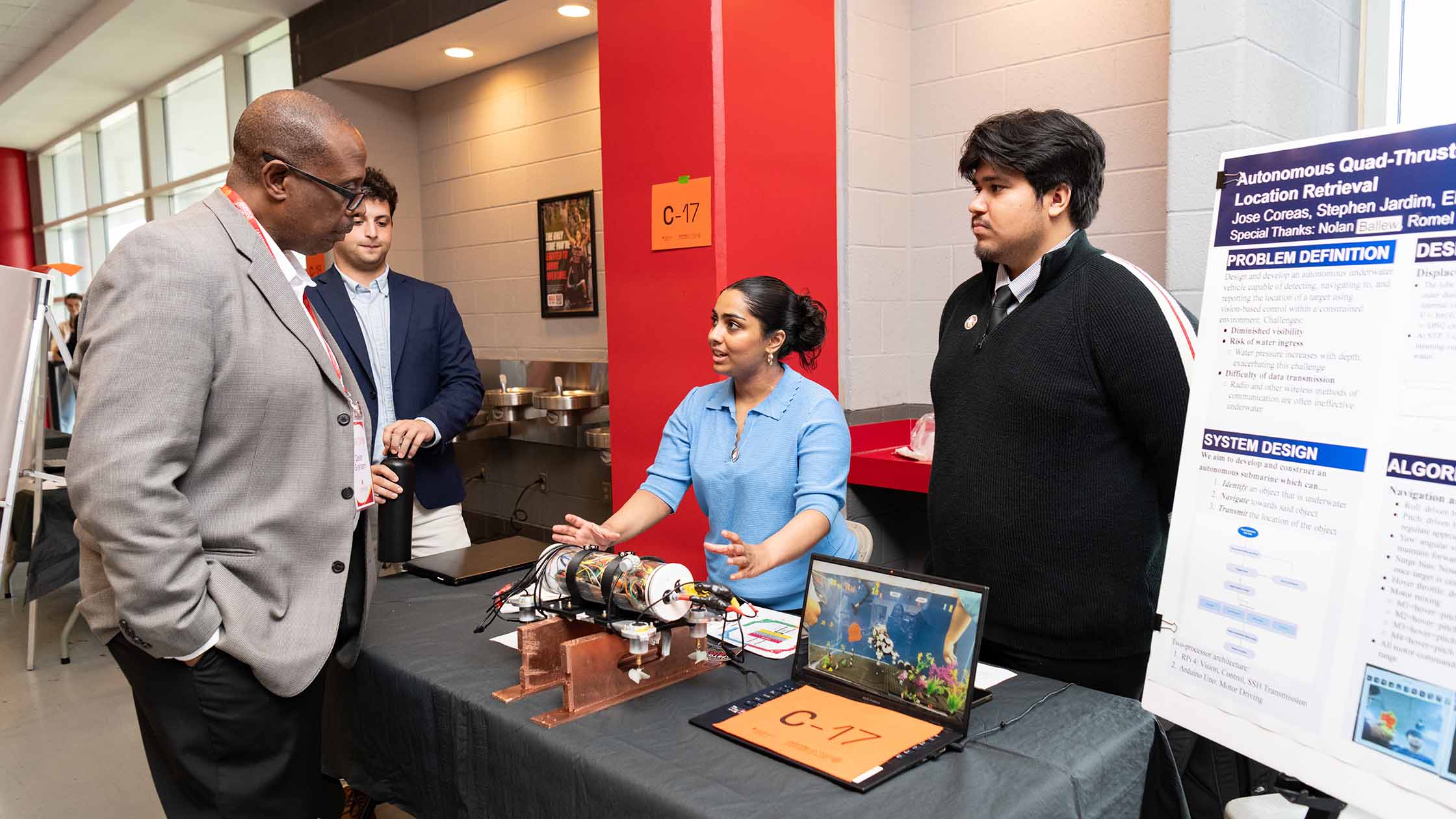
At the Capstone Design Expo 2026, 760 engineering students presented 143 projects, demonstrating. the best in student innovation, collaboration, and the future of engineering.
- Unique industry partnerships, like the Apple NextGen scholars program
- A landmark partnership with NASA to advance student innovation in space exploration
- A Capstone Design Expo, giving undergraduate students a chance to create real-world solutions and receive feedback from industry experts
Unique facilities
The Maryland Autonomous Technologies Research Innovation and eXploration (MATRIX) Lab is the University of Maryland's hub for autonomous technologies and uncrewed systems research in Southern Maryland.
You Can Launch It at Maryland

UMD’s entrepreneurial ecosystem has a track record of turning out creative, problem-solving businesses that make an impact—from campus to the global economy.
- Terrapin Works, with an extensive network of makerspaces for ideating, prototyping, and fabricating cutting-edge designs
- Terrapin Works Baltimore, where community members can explore, learn, create, and foster connections through the power of making
- The Edward & Jennifer St. John Center for Translational Engineering and Medicine in Baltimore, working with the University of Maryland School of Medicine, to create technologies that improve clinical practice and patient care
- The MATRIX Lab in St. Mary’s County, which is building autonomous systems to deliver medical supplies, disaster relief, and national security needs
- Stanley R. Zupnik Hall will promote interdisciplinary collaboration by housing civil engineering, faculty in the Quantum Technology Center, and student organizations in one place
Track record of ranking success: graduate, online programs
In April 2026, the Clark School ranked among the country’s top 10 public universities in graduate engineering programs for the eighth consecutive year and 18th overall for the third consecutive year. In January 2026, Maryland Engineering ranked 11th in the nation for online graduate engineering programs and 8th among public institutions.